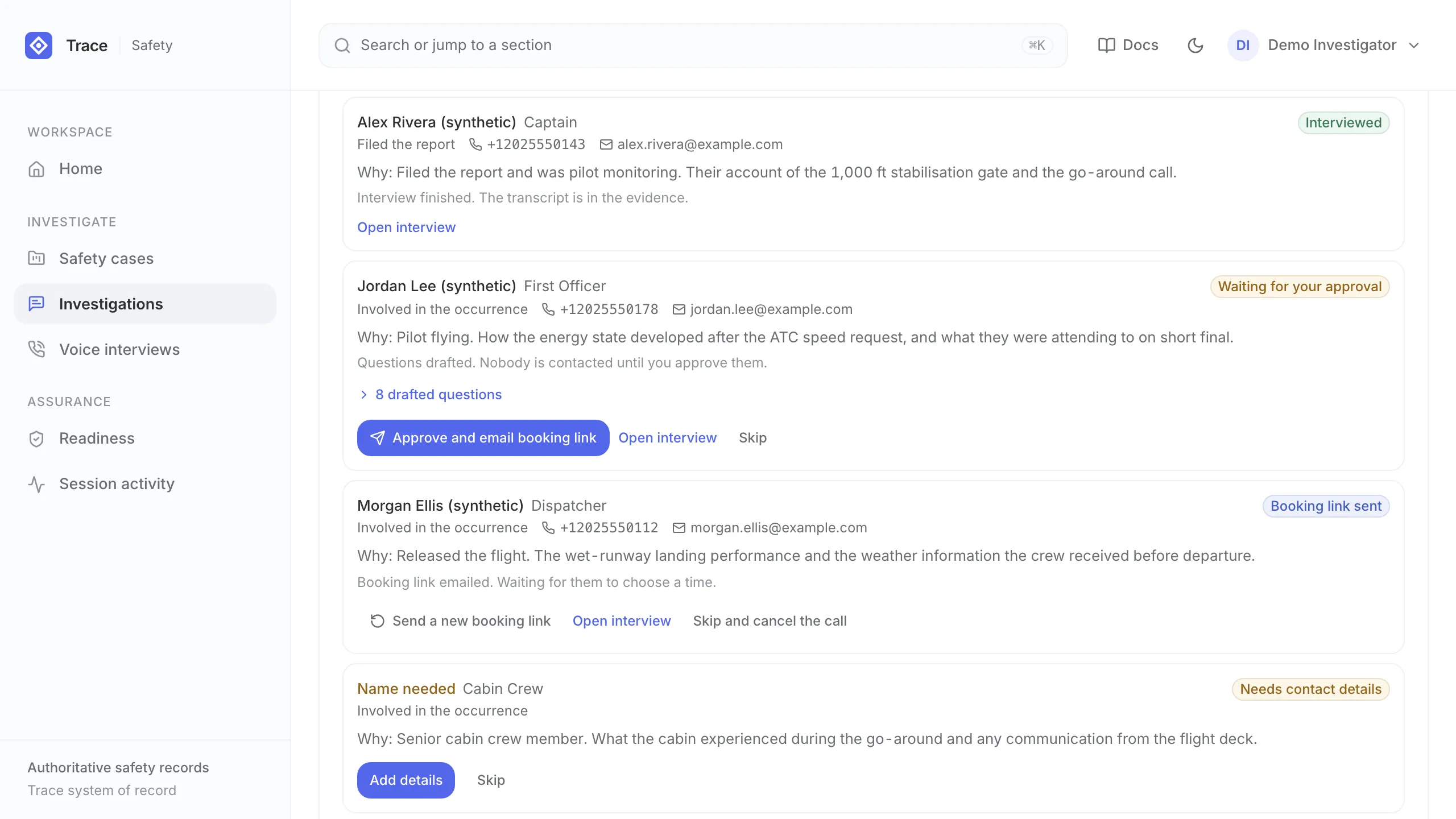
Trace AI · Safety investigations
From a safety report to a reviewable investigation.
Follow a case, hear from the people involved, and review every account before it shapes the findings.
From safety investigations and crew rosters to training, manuals, flight operations and customer service. AI drafts, reads, interviews and answers; the people accountable sign off what matters.


Investigate safety events, optimize rosters and decide disruptions, run safety and quality management, and keep crew qualified with training the flight data calls for. Open a product to follow its workflow.
Follow a case, hear from the people involved, and review every account before it shapes the findings.
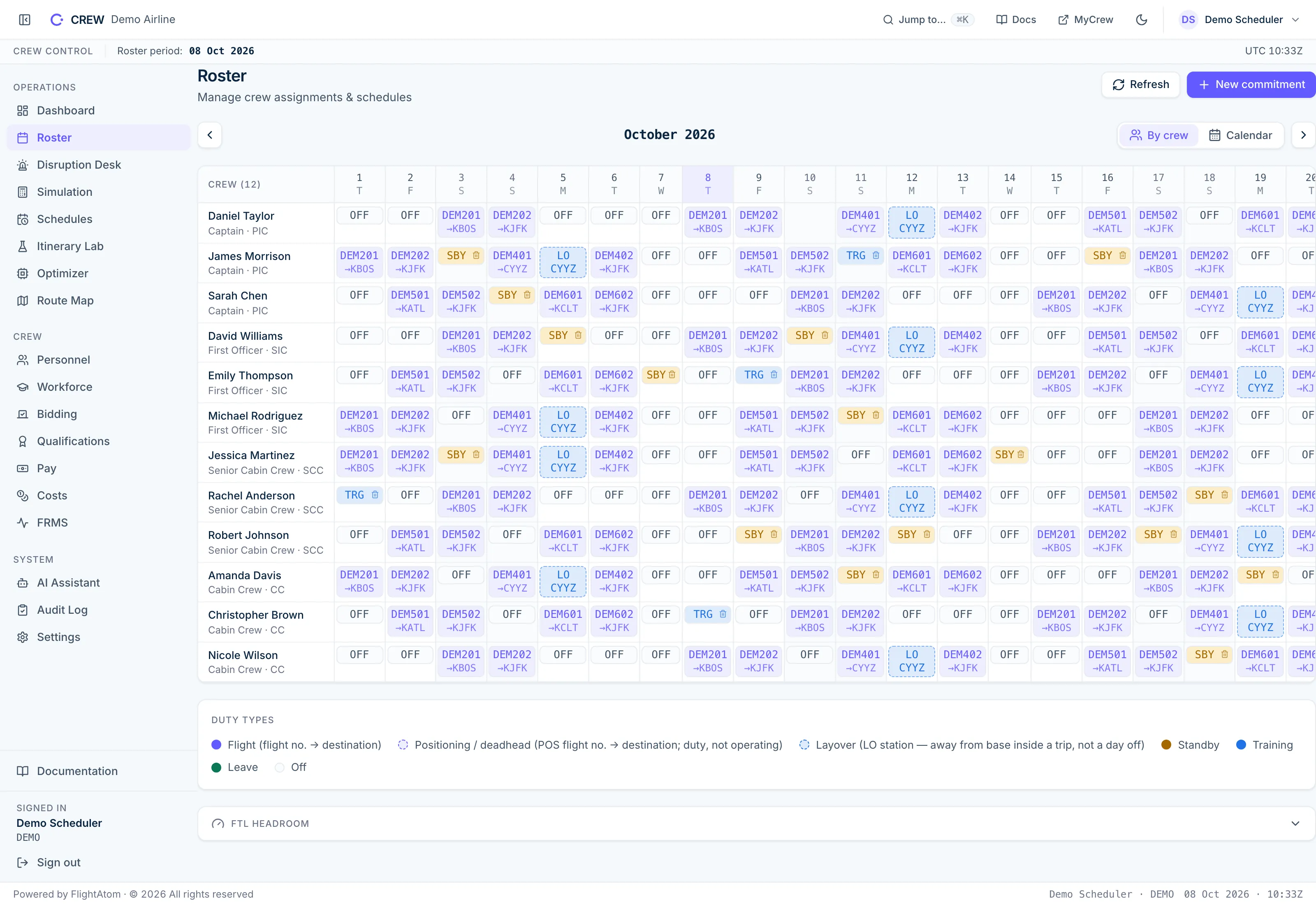
A constraint solver builds rosters the flight-time rules accept. When the day changes, compare ranked recovery options and approve the one that goes live.
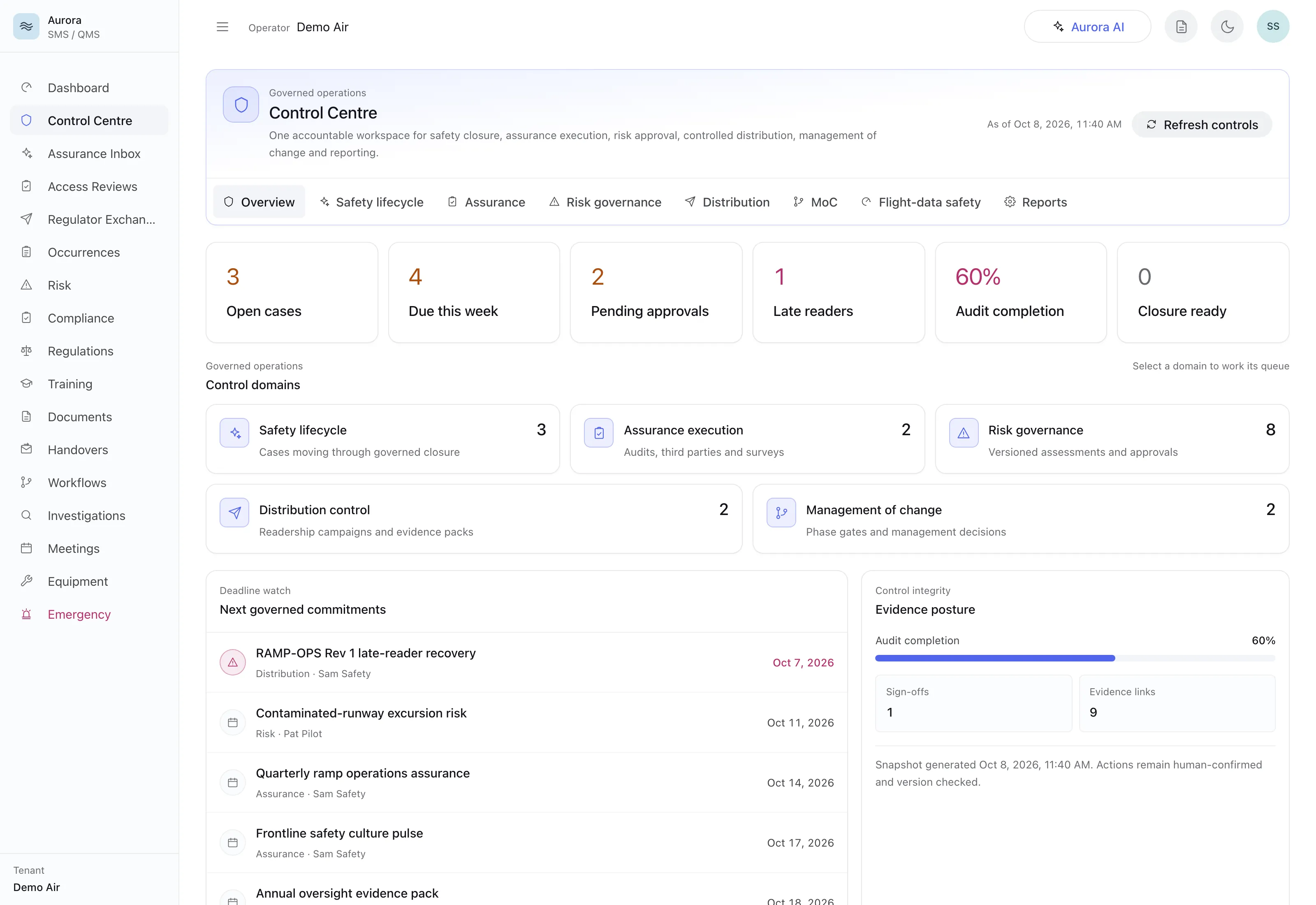
A standalone SMS and QMS with confidential reporting, bowtie risk on live barrier checks, gated closure and dossiers a regulator can verify.
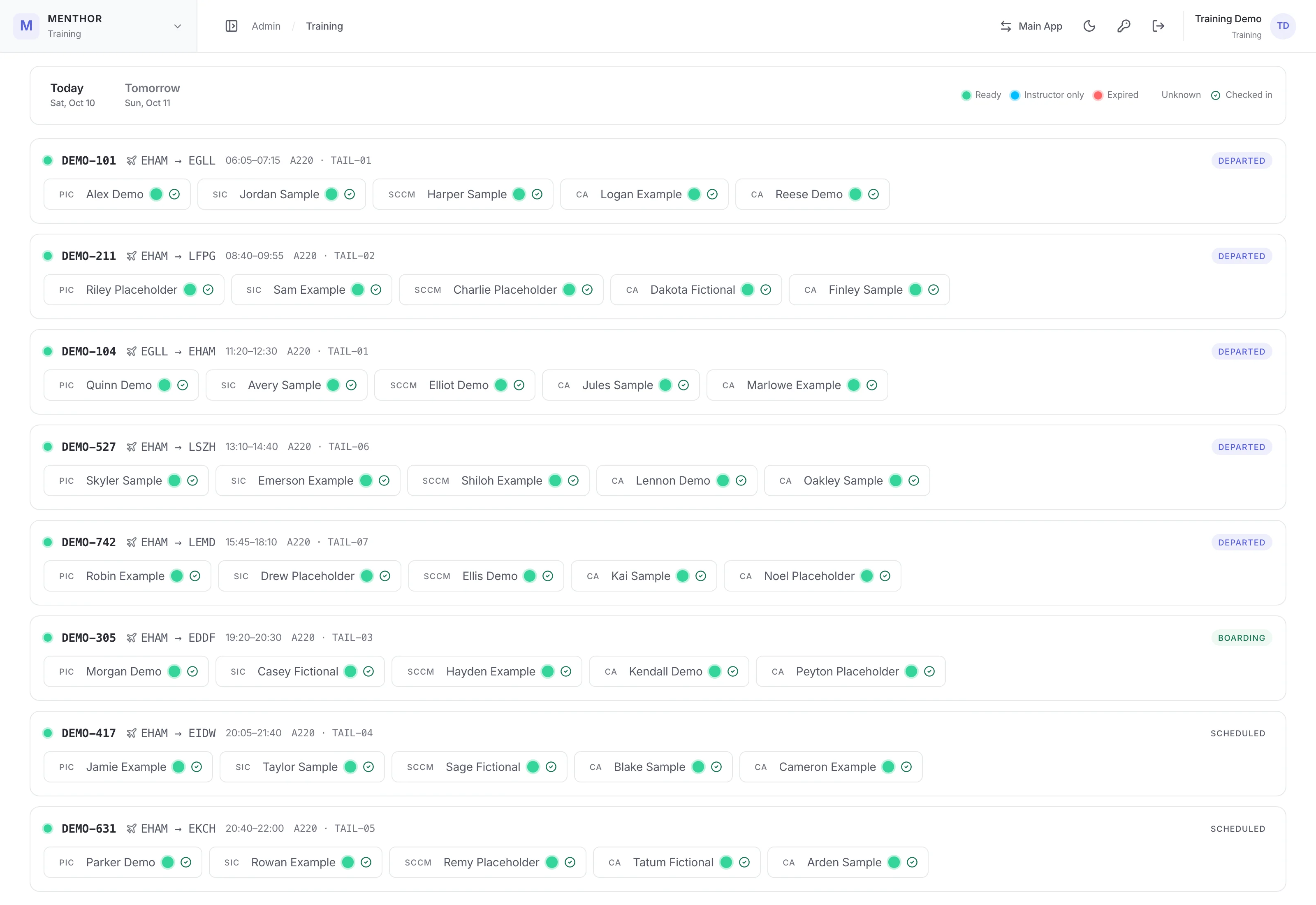
Check each rostered crew member against their flights, read the FDM events Safety approves, and assign individual training when an event recurs, without naming the pilot to the training team.
Actual product interfaces with demonstration data. The walkthroughs illustrate the process; measured customer outcomes are not presented.
Every product works on its own. Choose the area that fits your work, or compare product responsibilities before choosing.
Compare products and connections ↗A standalone SMS and QMS with confidential reporting, bowtie risk on live barrier checks, gated closure and dossiers a regulator can verify.
An investigation autopilot, AI phone interviews with Tracy, and an evidence-linked record with human sign-off.
ARINC 717 decoding, exceedance events, measurements on every flight, SPIs, and crew identity behind a gatekeeper.
Publish the training programme, coordinate inspector observations, and approve course material with a numbered certificate tied to the exact files.
Word manual import, AI review against cited OTAR rules, independent approval, change bars and read-and-sign releases.
Solver-built crew rosters checked against flight-time limits, all-or-nothing publication, disruption recovery, pay and crew self-service.
Pre-flight qualification compliance checks for every rostered crew member, Auto Training from recurring FDM events, EBT assessments, line training and assessed courses.
Proctored pilot assessments, an AI-voiced English test scored by speech assessment, and a hiring flow from application through onboarding to training.
One Microsoft work account and one page for every granted workspace application, with access levels, restrictions, launch checks, and admin previews.
Cited answers from approved manual revisions, a source-support check on manual answers, and no guessing when the evidence is weak.
Return-document checks, AI document reading and cross-checks, planned-versus-actual fuel, schedule analytics and fuel burn prediction.
A live on-time performance wallboard, a year of delay-code and block-time analysis, and a daily brief and weekly delay report built from the same flight records.
Build dashboards from plain language, test-run each query the AI writes, see how every figure is calculated, and schedule reports and alerts.
A realtime AI voice agent for airline calls, with governed knowledge, guest-brief handoff, and scripted test calls.
Trip planning in chat, schedule-checked booking links, consented enquiries and live-agent handoff, with every reply checked by code.
Choose the product that fits your team. Aurora stands on its own.
Find evidence, prepare work, and support decisions in context.
See the source, follow the record, and keep people in control.
Inspect the current product, agree the records and connections in scope, and compare a representative workflow with your current process. FlightAtom operates its own private deployment platform, WingLayer.
FlightAtom is an aviation software company. It builds independent products for safety management, investigations, crew scheduling, pilot training, recruitment, manuals and knowledge, flight operations, customer service, and travel planning. Choose the product that fits your work and arrange a focused demonstration.
No. Aurora is the standalone safety and quality management product. It is not a required starting point for the FlightAtom portfolio. Each product has its own scope; integration requirements are discussed for the workflow you choose.
AI supports specific workflows: cited manual answers in DELPHI, AI phone interviews and investigation drafting in Trace AI, report classification and bowtie drafting in Aurora, AI review of manuals against the OTAR Part 121 text they cite in FOLIO, an AI-voiced English test with automated speech scoring in HIRE, a read-only planning assistant in CREW AI, return-document reading and fuel-burn prediction in FLIGHT AI, dashboard building in Vision Ai, a realtime voice agent in CARE Ai, and trip planning in XENIA. MENTHOR Auto Training, which turns recurring flight data events into course assignments, runs on keyword rules rather than AI. Product pages describe the implemented capabilities and their operational boundaries.
Yes. Start with the workflow and team you want to support. A demonstration establishes the product fit, deployment scope, data requirements, and any interfaces you need.
Yes. The product tours show the products' own interfaces using demonstration or synthetic sample data. They illustrate the workflows without exposing live operational records.
Tell us where work gets held up. We will focus the conversation on the relevant product, the record you need, and a practical evaluation.